Warning: This is not a quick blog post. This is a comprehensive, 2,500-word masterclass on building a sustainable online business in Nepal in 2026. If you are serious about making money online, bookmark this page, grab a cup of coffee (or chiya), and read every word.
The Nepali e-commerce market has evolved. Gone are the wild west days of 2020 where anyone could post a blurry photo on Instagram and make sales. Today, customers expect professionalism, speed, and security. The E-Commerce Act 2025 has raised the bar, but it has also cleared the field of scammers, leaving massive opportunities for legitimate entrepreneurs like you.
Phase 1: Strategy & Platform Selection
The first decision you make—where to sell—will determine your profitability for years to come. In Nepal, you generally have three venues:
1. Social Media (The "Hustle" Route)
Selling exclusively through Instagram DMs or WhatsApp.
Pros: Direct connection with customers, full control over brand.
Cons: Extremely manual. You spend 80% of your time answering "Price?" comments.
Scaling is impossible without a team. Payment collection is messy.
2. The "Taxed" Marketplaces (Daraz, Sastodeal)
Pros: High traffic, established trust.
Cons: High fees. As discussed in our Daraz Alternatives article, you lose 15-20% of
your revenue. This forces you to price your items higher, making you less competitive.
3. The "Pure Profit" Marketplaces (Neshop)
This is the sweet spot for 2026. Neshop offers the traffic of a marketplace with the profitability of your own site (0% commission).
Use Social Media (Instagram/TikTok) for brand building and top-of-funnel awareness.
Drive all traffic to your Neshop store for the actual transaction.
Result: You get viral reach from social + automated logistics/payments from Neshop + 0% commission fees.
Phase 2: Sourcing Winning Products
You can't sell what you don't have. Where do you get products?
A. China Import (Alibaba/Taobao)
This is where the big margin is. Buy for Rs. 200, sell for Rs. 1000.
How: Use a freight forwarder (cargo) service in Kathmandu. They handle customs.
You key is finding unique items (strange kitchen gadgets, specific anime merch) that aren't already
flooded in New Road.
B. Local Manufacturing (Made in Nepal)
Shoes (Goldstar, Caliber), Pashmina, and Handicrafts.
Why: patriotic pride is high. "Made in Nepal" sells well if the quality is
good. Plus, lead times are short (2 days vs 30 days from China).
C. Wholesaling (New Road/Mahabouddha)
Visit the wholesale markets. Build relationships. You don't need to buy 1000 pieces. Start with 10.
Negotiate.
Tip: Don't buy what YOU like. Buy what is trending on TikTok.
Phase 3: The Perfect Product Page
Your product listing is your 24/7 salesman. If it's bad, it doesn't matter if you have the best product regarding quality. Here is the formula for a perfect listing on Neshop:
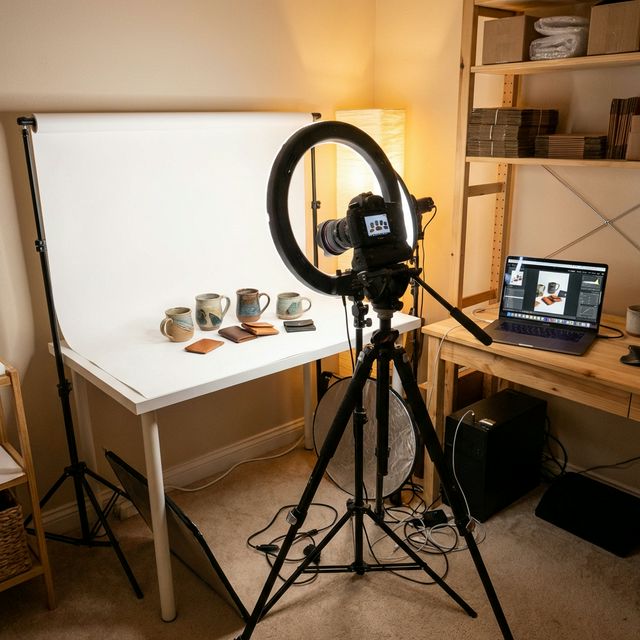
A. Photography
You don't need a DSLR. An iPhone 15 or Samsung S25 is enough.
- Lighting: Never use flash. Use natural window light.
- Background: Use a clean white chart paper for "studio" shots, and a lifestyle setting (e.g., a hand holding the phone case, not just the case on a table) for the second shot.
- Angles: Show the front, back, side, and scale (put a coin or pen next to it if size is hard to judge).
B. SEO Descriptions
Don't just write "Cotton T-shirt". Think about what people search for.
Bad: "Blue shirt for men."
Good: "Premium Cotton Formal Shirt for Men - Navy Blue - Breathable Fabric for Summer
Office Wear in Nepal."
Notice the difference? The second one hits keywords like "Cotton", "Formal", "Summer", "Office". Neshop's search algorithm loves this.
C. Pricing Psychology
The "99" trick still works. Rs. 999 feels way cheaper than Rs. 1000. Also, always show a "Compare at" price. If you are selling for Rs. 999, show the MRP as Rs. 1500 so the customer sees a Rs. 500 saving.
Phase 4: Marketing that actually Sells
Posting on your Page isn't marketing. That's just noise. Marketing is getting your product in front of strangers who want to buy it.
1. Facebook/Instagram Ads
Budget: Start with Rs. 500/day.
Strategy: "Broad Targeting" is the secret in 2026. Don't narrow down to "People
who like shoes". Just target "Age 18-35, City: Kathmandu". Let Facebook's AI find the buyers.
Creative: Video beats image. A 15-second Reel showing the product in use will
convert 3x better than a static photo.
2. TikTok & Reels (Organic)
Post 3 times a day. Quality comes from quantity in the beginning.
Morning: Educational (How to style this shirt).
Afternoon: Entertainment (Trending audio with your product).
Evening: Hard Sell (Limited stock alert).
This is free traffic. Don't ignore it.
3. Influencer Marketing (Micro vs Macro)
Don't pursue the celebs with 1M followers. They are expensive and their audience is too broad. Go for
the "Micro-Influencer" with 10k-50k followers.
The Deal: Send them the product for free + offer a unique discount code
"PRIYA10". Pay them a commission on sales, not a flat fee.
4. Neshop Featured Listings
Since you pay 0% commission on Neshop, use some of that saved money to buy "Featured" spots on their homepage. It's usually cheaper than Facebook Ads and the traffic is "high intent"—people are there to shop, not to look at memes.
Phase 5: Logistics & Returns
This is where businesses die. Selling is easy; fulfilling is hard.
Choosing a Courier
Neshop Logistics: If you sell on Neshop, use their integrated partners (NCM/Upaya).
It's seamless. The rider comes to you.
Independent: If you sell on Insta, use Pathao Parcel for inside valley
(Instant/Same Day) and Nepal Can Move for outside valley.
Packaging
Your package is the only physical touchpoint you have with the customer.
Bad: A dusty product wrapped in newspaper and tape.
Good: A clean bubble mailer, a "Thank You" card, and maybe a small freebie
(like a sticker). This costs Rs. 20 but creates loyal customers who post stories of your package.
Managing Returns
Returns will happen.
1. Have a clear policy. "7 Day Returns for Manufacturing Defects".
2. Don't argue with customers over small things. If a Rs. 500 item is broken, just replace it.
The bad review will cost you 10 customers.
3. Call before Dispatch: "Hello sir, confirming your order. We are shipping
today." This reduces returns by 40%.
Phase 6: The Profit Calculator
Don't be a revenue millionaire and a profit pauper. You need to know your numbers.
| Item | Cost |
|---|---|
| Selling Price | Rs. 1000 |
| Product Cost (COGS) | - Rs. 500 |
| Packaging | - Rs. 20 |
| Ad Cost (CAC) | - Rs. 150 |
| Platform Fee (Neshop) | - Rs. 0 |
| Net Profit | Rs. 330 (33%) |
If you were on Daraz, you would subtract another Rs. 150 commission, leaving you with Rs. 180 profit. Neshop nearly doubles your profit margin.
Real Success Stories
The Student Side-Hustle
Niraj, a BBA student, buys "Gaming Sleeves" for Rs. 30 a pair from Mahabouddha. He sells them for Rs. 150 online. He sells 10 pairs a day. That's Rs. 1200 profit/day = Rs. 36,000/month. More than an entry-level bank job.
Selling online in Nepal in 2026 is a massive opportunity. The infrastructure is there, the customers are there, and with platforms like Neshop, the barriers are gone. The only variable left is YOU.

Comments (6)
Leave a Comment
This is honestly the best guide I have read. The point about "Confirmation Calls" is gold. I started doing it and my returns dropped effectively to zero.
I didn't know about Neshop's featured listings. Is it worth it for clothing?
Absolutely Meena. Fashion is visually driven. Being on the homepage gets you instant eyeballs.
Can you make a video tutorial on product photography? That part is hard for me.
Do I need a PAN card to start selling on Neshop?
No Suman, you can start as an individual with your Citizenship. But once you cross 50 lakhs in sales, you need VAT.
I tried boosting post on FB but got no sales. What did I do wrong?