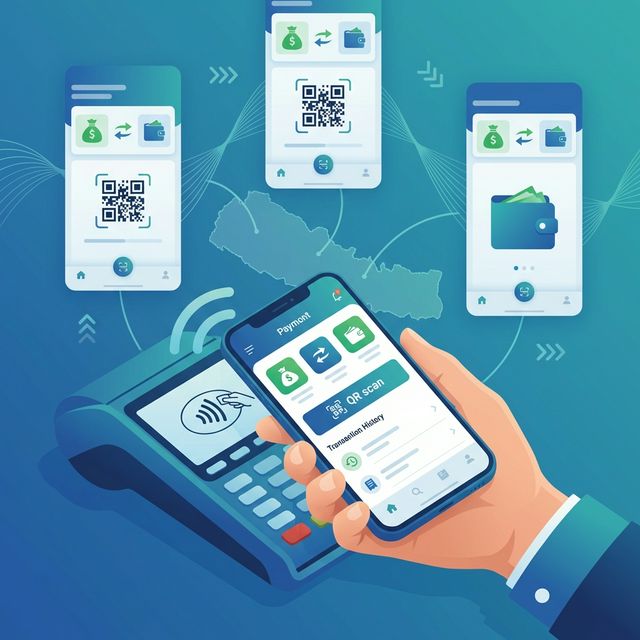
The Cashless Revolution in Nepal
Remember when buying a movie ticket meant standing in line for hours? Or paying the electricity bill took half a day? In just a few years, Nepal has undergone a massive digital transformation. By 2026, cash is no longer king in Kathmandu—QR codes are.
From buying vegetables at the local sticking market to paying substantial taxes, digital payments have permeated every layer of Nepali society. The data from Nepal Rastra Bank is staggering: over 70% of retail transactions in urban areas are now digital. But with so many apps, wallets, and gateways, it can get confusing. Which one offers the best cashback? Which is safest? Do you really need all of them?
This comprehensive guide breaks down the entire Nepal digital payment ecosystem, helping you maximize savings, ensure security, and choose the right tools for your financial life.
The Big Three: eSewa vs Khalti vs IME Pay
Digital wallets are the entry point for most Nepalis. They hold a balance separate from your bank account and are packed with utility payment options. Let's compare the titans.
1. eSewa: The Pioneer
Established way back in 2009, eSewa is the grandfather of digital payments in Nepal. It has the largest merchant network, meaning if a shop accepts digital payment, they almost certainly accept eSewa.
- Best For: Utility payments (electricity, water, internet), airline tickets, and government payments.
- Pros: Massive acceptance, reliable uptime, offline payment mode (SMS).
- Cons: User interface feels dated compared to competitors, cashback offers have reduced over time.
- Verdict: The "must-have" app simply because everyone uses it.
2. Khalti: The Challenger
Khalti burst onto the scene with a slick, modern interface and aggressive cashback strategy. They focused heavily on the user experience and gamified payments (Khalti Points).
- Best For: Movie tickets, voting for reality shows, and peer-to-peer transfers.
- Pros: Beautiful UI, excellent API for developers, "Khalti Bazaar" for in-app shopping.
- Cons: Merchant network slightly smaller than eSewa outside major cities.
- Verdict: The best user experience. If you value design and ease of use, Khalti wins.
3. IME Pay: The Remittance King
Backed by the IME Group, IME Pay leverages their massive remittance network. It stands out by offering interest on your wallet balance—effectively turning your wallet into a savings account.
- Best For: Receiving remittance, earning interest, fuel payments at petrol pumps.
- Pros: Interest on balance (currently ~4-5%), virtual Visa card integration.
- Cons: App can be cluttered.
- Verdict: Best for financial savvy users who want their idle money to grow.
Bank Integration: Fonepay & ConnectIPS
While wallets are great, they require "loading" money. Direct bank payments skip this step.
Fonepay
If you use a mobile banking app (Nabil SmartBank, MoBank, etc.), you are using Fonepay. It is the underlying network that powers the ubiquitous QR codes you see everywhere from tea stalls to department stores.
The Fonepay Advantage: Money moves directly from your bank to the merchant's bank. No loading, no wallet limits. It is seamless and free for customers (though merchants pay a fee).
ConnectIPS
ConnectIPS is the heavyweight champion for large transfers. Developed by Nepal Clearing House Ltd (NCHL), it allows you to transfer up to NPR 20 Lakhs (2 million) per day directly between bank accounts.
- Use Case: Paying rent, school fees, buying a motorbike, stock trading (TMS) load, tax payments.
- Cost: Nominal fee (Rs. 2 - Rs. 8) per transaction.
- Why simple wallets can't complete: Wallets have lower transaction limits. For big money, you need ConnectIPS.
International Payments: The Dollar Card
For years, Nepalis were locked out of the global digital economy. We couldn't pay for Netflix, buy games on Steam, or host websites on International servers. That changed with the introduction of the Prepaid Dollar Card.
What is a Dollar Card?
It is a prepaid Visa/Mastercard issued by Nepali A-class banks that allows you to spend up to $500 USD per year for goods and services abroad.
How to Get One
- Eligibility: You must have a PAN card and a bank account.
- Process: Visit your bank, fill out a form, pay a designated issuance fee (usually NPR 500-1000).
- Top-up: You load it with NPR, creating a USD balance at the day's exchange rate.
Limitations
- $500 Limit: This is a yearly cap. It resets every Nepali fiscal year (Shrawan 1st).
- Non-Refundable: Once loaded, money cannot easily be converted back to NPR.
- No Capital Transactions: You cannot use it to buy stocks, crypto, or invest abroad. Only for goods (Amazon) and services (Netflix, Hosting).
Payment Gateways for Business
If you are starting an online business, you need to accept payments. Here are your options:
1. eSewa/Khalti Merchant API
Easy to integrate into websites. Customers pay using their wallet balance. eSewa charges ~1-2% commission per transaction.
2. Fonepay Merchant
Get a QR code stand for your physical store or integrate the "Scan to Pay" button on your website. Money goes straight to your bank.
3. Nabil/Himalayan Bank Payment Gateway
Allows you to accept Visa/Mastercard credit cards from international customers. Essential if you are targeting tourists or exporting goods. Setup cost is higher (NPR 10k-50k) and requires security audits.
Security & Fraud Prevention
As money goes digital, so do thieves. Social engineering is the #1 threat in Nepal right now.
Common Scams
- "You won a lottery" (WhatsApp): Scammers claim you won 25 Lakhs but need to pay a 50k "tax" via eSewa first. Never pay to win.
- OTP Sharing: Someone calls pretending to be bank staff and asks for the SMS code "to verify your KYC." NEVER share your OTP.
- Fake QR Codes: Always verify the merchant name on your screen after scanning a QR code before confirming the payment.
Best Practices
- Enable Biometric Login (Fingerprint/FaceID) on all finance apps.
- Use a distinct MPIN for transactions, different from your phone unlock code.
- Check your transaction history weekly for small unauthorized deductions.
The Future: National Payment Switch & Digital Currency
The National Payment Switch (NPS) is rolling out in phases. Phase 1 (non-card retail) is active (NepalPay QR). Phase 2 will enable interoperability—meaning you can scan an eSewa QR with your Khalti app seamlessly.
Nepal Rastra Bank is also researching CBDC (Central Bank Digital Currency), a digital version of the Nepali Rupee. This could eventually replace physical cash entirely, offering safer and traceable transactions.
Frequently Asked Questions
Can I use eSewa to pay in India?
Currently, cross-border payments specifically via eSewa wallets aren't fully open for retail. However, Fonepay and India's UPI have launched interoperability. You can use your Nepali banking app (via Fonepay) to scan UPI QR codes in India at select merchants.
What is the limit for eSewa/Khalti transactions?
For verified KYC users: NPR 25,000 per transaction, NPR 1 Lakh per day, and NPR 5 Lakhs per month (limits subject to NRB changes). Unverified accounts have very low limits (Rs. 5000/month).
Can I withdraw cash from my digital wallet?
Yes, but indirectly. You transfer the wallet balance to your bank account (free or nominal charge) and then withdraw via ATM. You cannot withdraw cash from a wallet agent legally anymore.
Which bank has the best mobile banking app?
Nabil Bank (Nabil SmartBank) and Global IME (Global Smart Plus) are consistently rated high for stability, features, and UI experience. Most use the F1Soft platform, so features are similar, but reliability varies.

Comments (8)
Leave a Comment
I started using IME Pay for the interest on balance. It's actually legit! Better than keeping money in a savings account with 2% interest.
The dollar card $500 limit is too low. I wish government would increase it to at least $2000. It's hard for freelancers to buy equipment.
Agreed Pradip. There are talks about increasing it for people with verified foreign income sources, but nothing official yet.
Does ConnectIPS work on weekends? I need to transfer fee for my college admission.
Yes Suman, ConnectIPS works 24/7. However, transactions above a certain limit might sometimes be held for verification during holidays, but usually, it's instant.
Khalti's UI is so much better than eSewa. eSewa feels like a government website from 2010 lol.
Be careful with the lottery scams mentioned. My uncle almost sent 10k to a guy claiming he won a Pulsar bike.
Can I link my Dollar card to PayPal?
Yes, you can link it to verified PayPal accounts to MAKE payments. But you cannot receive money onto the card via PayPal.